


























Those details matter. An OE-marked tyre is tuned to the car's suspension, noise targets and stability systems, and fitting a non-marked tyre of the same size can make a Mercedes S-Class or Rolls-Royce Ghost noticeably louder and less composed. Staggered sizes, such as 255/45 R22 front and 285/40 R22 rear on a Rolls-Royce Cullinan, are also common.
We source OE-marked tyres for most luxury models, often same or next day for rare sizes, and fit them at your residence or office using rim-protecting equipment and on-van balancing.
Why OE-marked tyres matter on luxury cars
An OE-marked tyre has been tested and approved by the carmaker for that specific model, covering noise, ride, handling and how it works with air suspension and stability systems. On a car tuned for silence, such as a Rolls-Royce or Mercedes-Maybach, the difference between a marked and unmarked tyre of the same size is easy to hear.
OE-marked tyres usually cost 5 to 15% more. If you want to keep the car feeling as it did new, they are worth it; for a high-mileage chauffeur car, a premium non-marked tyre can be a sensible compromise.
- Mercedes-Benz: MO, MO1 (AMG), MOE (run-flat), MO-S (sealant)
- BMW: star marking on BMW-approved tyres
- Audi: AO, RO1 for RS models
- Jaguar Land Rover: J or LR
Foam noise inserts
A foam ring glued inside the tyre absorbs cavity resonance and can lower interior road noise by several decibels on coarse UAE asphalt. These tyres need care when fitted: the foam must not be torn by the tyre changer, and puncture repairs require removing a section of foam first.
Our technicians are trained for foam-lined tyres and use the correct repair method. Not every puncture in a foam tyre can be repaired, so we check before quoting.
Air suspension, weight and tyre wear
Luxury cars are heavy, often 2.2 to 2.8 tonnes, and the weight combined with powerful engines and soft compounds means 20 to 22 inch tyres commonly last 25,000 to 40,000 km. Air-suspension cars lowered at speed can also show inner-edge wear if alignment drifts.
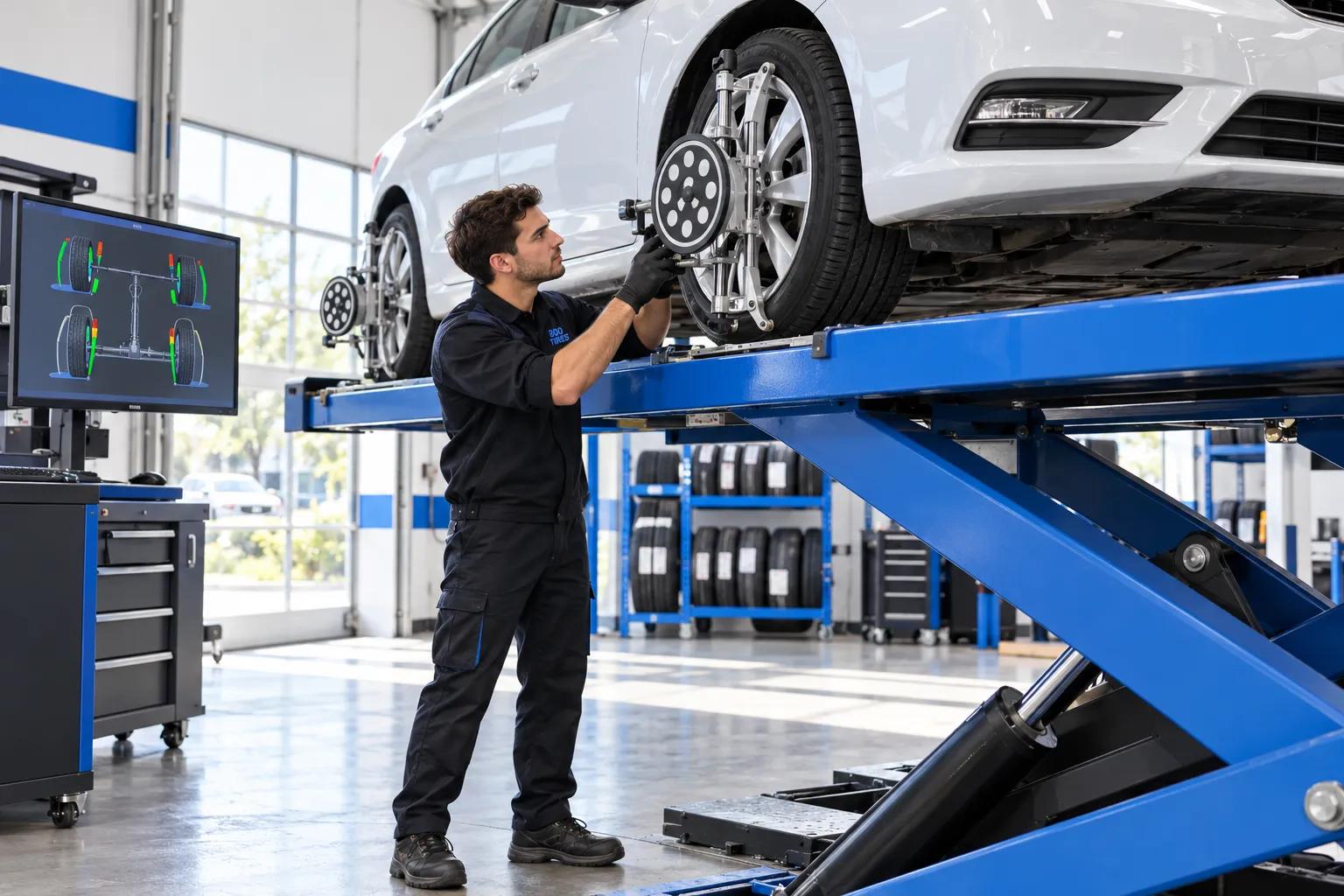
Check alignment once a year or after any heavy speed bump impact, and rotate where the sizes allow.
Technician tips
- Ask for the OE marking that matches your car before ordering.
- Keep the same tyre model on both axles for consistent handling.
- Check TPMS warnings promptly; low-profile tyres hide pressure loss.
- Use the comfort pressure for city driving and the high-speed value for long highway trips.
- Have wheels balanced at every tyre change; 22 inch wheels show vibration quickly.
- Store a seasonal set indoors, upright and out of sun.