


























UAE off-roading is mostly sand, and sand rewards a flexible sidewall and a wide footprint at low pressure more than an aggressive tread. That is why many experienced dune drivers in Al Faya, Big Red and Liwa prefer a good A/T tyre over an M/T, which can dig in on soft sand. Rocky wadis in Ras Al Khaimah and Fujairah, on the other hand, punish thin sidewalls.
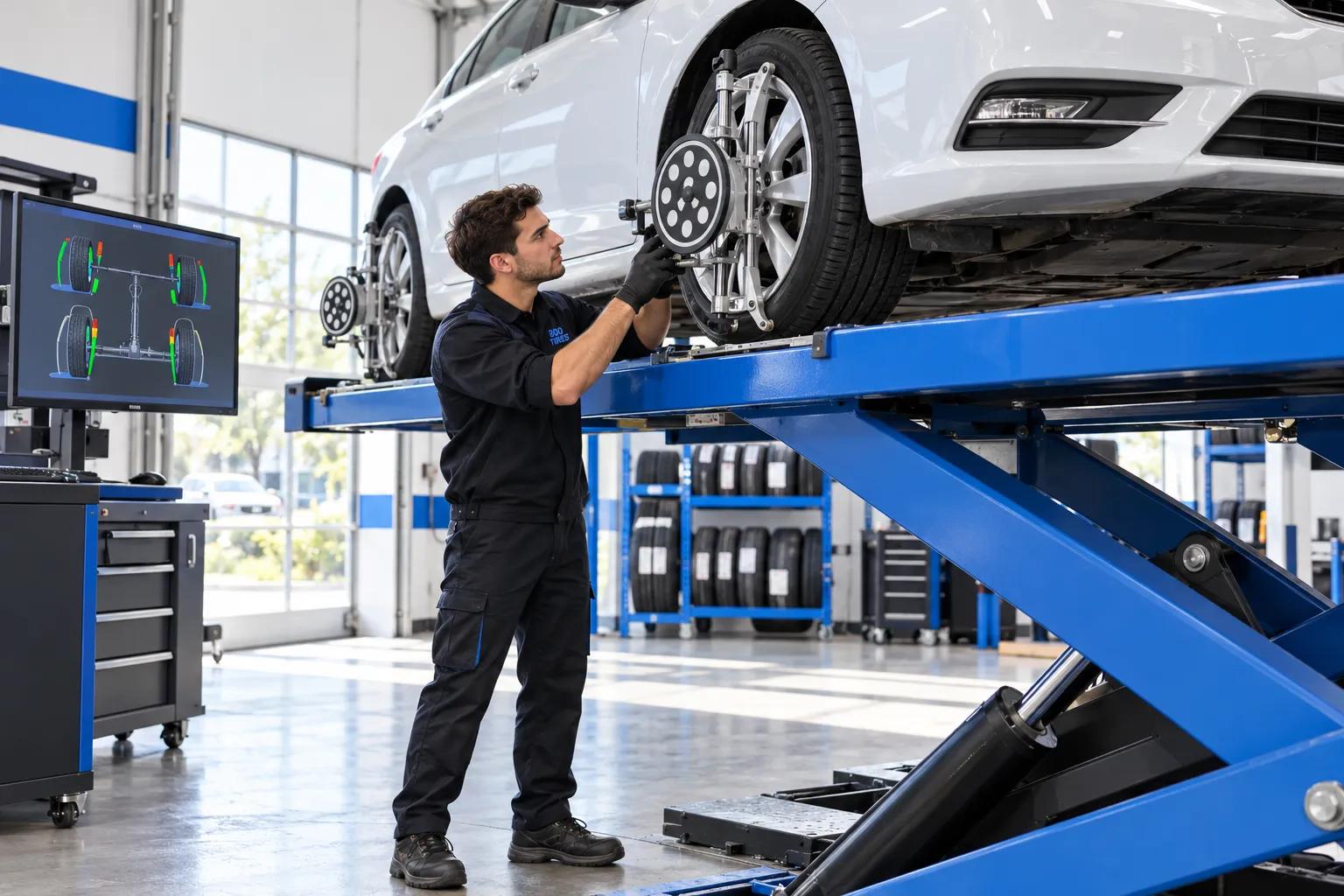
Off-road tyres also have to cope with the drive home: 100 km or more on the E44 or E11 at 120 km/h, often without fully reinflating. We fit and balance A/T and M/T tyres on site, including LT sizes up to 35 inch overall diameter.
A/T or M/T for UAE terrain
An all-terrain tyre is the better choice for most UAE off-roaders because the main terrain is sand, where a flexible tyre at low pressure floats better than a deeply lugged mud tyre. A/T tyres also wear longer and are quieter on the long highway runs to and from the dunes.
A mud-terrain tyre earns its place if you drive rocky wadis and mountain tracks in Ras Al Khaimah, Fujairah or Oman most weekends. Its thicker sidewall and open tread resist cuts and clear stones, at the cost of road noise and faster wear on tarmac.
- Dunes at Al Faya, Big Red, Liwa: A/T, aired down to 15 to 20 PSI
- Wadis and gravel tracks: A/T with 3-ply sidewall or M/T
- Mostly road with occasional desert camping: A/T or rugged-terrain (R/T)
Airing down safely in sand
Dropping from 35 PSI to 18 PSI roughly doubles the length of a tyre's footprint, which is why airing down is the single most effective thing you can do before driving on sand. Use a proper gauge or deflator, not guesswork, and keep all four tyres equal.
At low pressure avoid sharp turns at speed and sudden braking on slopes, which can roll the tyre off the bead. Carry a 12 V compressor that can refill four large tyres in under 15 minutes, and reinflate before you hit tarmac.
Upsizing and the overall diameter rule
Fitting larger tyres, such as moving a Wrangler from 31 to 33 or 35 inch, changes the overall diameter and affects the speedometer, gearing, braking and stability control calibration. Changes of more than about 3% usually need recalibration and sometimes a lift kit to avoid rubbing.
Larger tyres also weigh more, which loads wheel bearings and brakes. If you are planning a size change, send us your current size and the target size and we will tell you what is involved before you buy.
Sidewall damage and when to replace
Any cut, bulge or exposed cord on an off-road tyre's sidewall means replacement, because sidewalls cannot be safely repaired. Low-pressure sand driving also causes heat damage that may show as fine cracking or a rippled sidewall.
Inspect tyres after every trip. Remove stones from the tread, look for cuts on both sidewalls, and check for slow leaks the next morning.
Technician tips
- Air down to 15 to 20 PSI for sand and reinflate before the highway.
- Choose a 3-ply sidewall A/T if you also drive rocky wadis.
- Carry a full-size spare in the same size and a reliable compressor.
- Check for cuts and stones after every trip.
- Keep upsizing within 3% of stock unless the car is recalibrated.
- Balance off-road tyres every 10,000 km; sand and mud throw balance off.
- Never mix different tyre types or tread patterns on the same vehicle.